Is it possible to maintain high standards of quality without overspending on operating costs in a California commercial property?
At Bell Properties Commercial Real Estate, we say yes. It’s not only possible, it’s the most desirable and profitable way to rent out commercial property.
Between rising utility rates, strict building codes, and tenant expectations for comfort and sustainability, reducing operating costs can feel like a challenge. Cut too deep, and there’s a risk of tenant dissatisfaction or noncompliance. Spend too freely, and profits erode.
Achieve both efficiency and quality with smart management, data-driven upgrades, and strategic financing. These things will help owners lower expenses, enhance tenant experience, and protect long-term asset value.
Our Summary:
|
Start With Data: Benchmark, Audit, and Prioritize
Before investing in operational improvements, understand where the money is going.
Benchmark energy and water usage. California requires many commercial property owners to report energy use to the state annually, but even if your building is below the reporting threshold, benchmarking is invaluable. Tools like ENERGY STAR Portfolio Manager or your utility’s benchmarking service reveal inefficiencies and help set baselines for improvement.
Commission a professional audit. An investment-grade energy or operational audit by an experienced mechanical, electrical, and plumbing (MEP) engineer identifies measures with quick paybacks (like lighting or controls), mid-term returns (such as HVAC upgrades), and longer-term opportunities (solar or battery systems).
Use tenant data. In California, owners can request aggregated tenant utility data to get a clearer picture of how much energy commercial tenants consume. That helps identify which spaces or systems drive costs, and whether tenant behavior, plug loads, or equipment upgrades should be targeted first.
By measuring before managing, it’s easier to direct capital toward projects that make the biggest difference to a building’s bottom line.
Not sure how to measure or which metrics will make the most sense? Contact us at Bell Properties Commercial Real Estate and we’ll get things started.
Focus on Low-Cost, High-Impact Fixes (0–2 Year Payback)
Some of the most effective cost-reduction measures require minimal investment and deliver results almost immediately. This is a logical starting point for many commercial real estate investors.
Upgrade to LED lighting with controls. Replacing outdated fluorescent or HID lighting with LEDs cuts electricity use dramatically. Add occupancy sensors, daylight dimming, and scheduling to capture even more savings. Payback is often less than two years.
Optimize HVAC schedules and set points. Many systems run longer or harder than necessary. Reprogram thermostats and building automation systems (BAS) to match actual occupancy, and fine-tune temperature set points to reduce run time without affecting comfort.
Implement proactive maintenance. Regular coil cleaning, air filter changes, and calibration of dampers, valves, and economizers restore lost efficiency and prevent expensive emergency repairs.
Retro-commission controls. Older BAS or standalone thermostats often operate far from design intent. Retro-commissioning ensures sensors, dampers, and schedules work together efficiently, often cutting energy use 10–20%.
Engage tenants. Sub-metering and simple education about lighting, waste management, and thermostat use help tenants reduce their own consumption, lowering overall operating expenses and improving cooperation.
These small operational changes quickly lower utility costs, which is a big part of operational expenses in most buildings. Changes like these will also improve tenant comfort and extend equipment life.
Upgrade Strategically: HVAC, Envelope, and Water Systems
Once low-cost measures are complete, look at capital projects that enhance both building performance and asset quality.
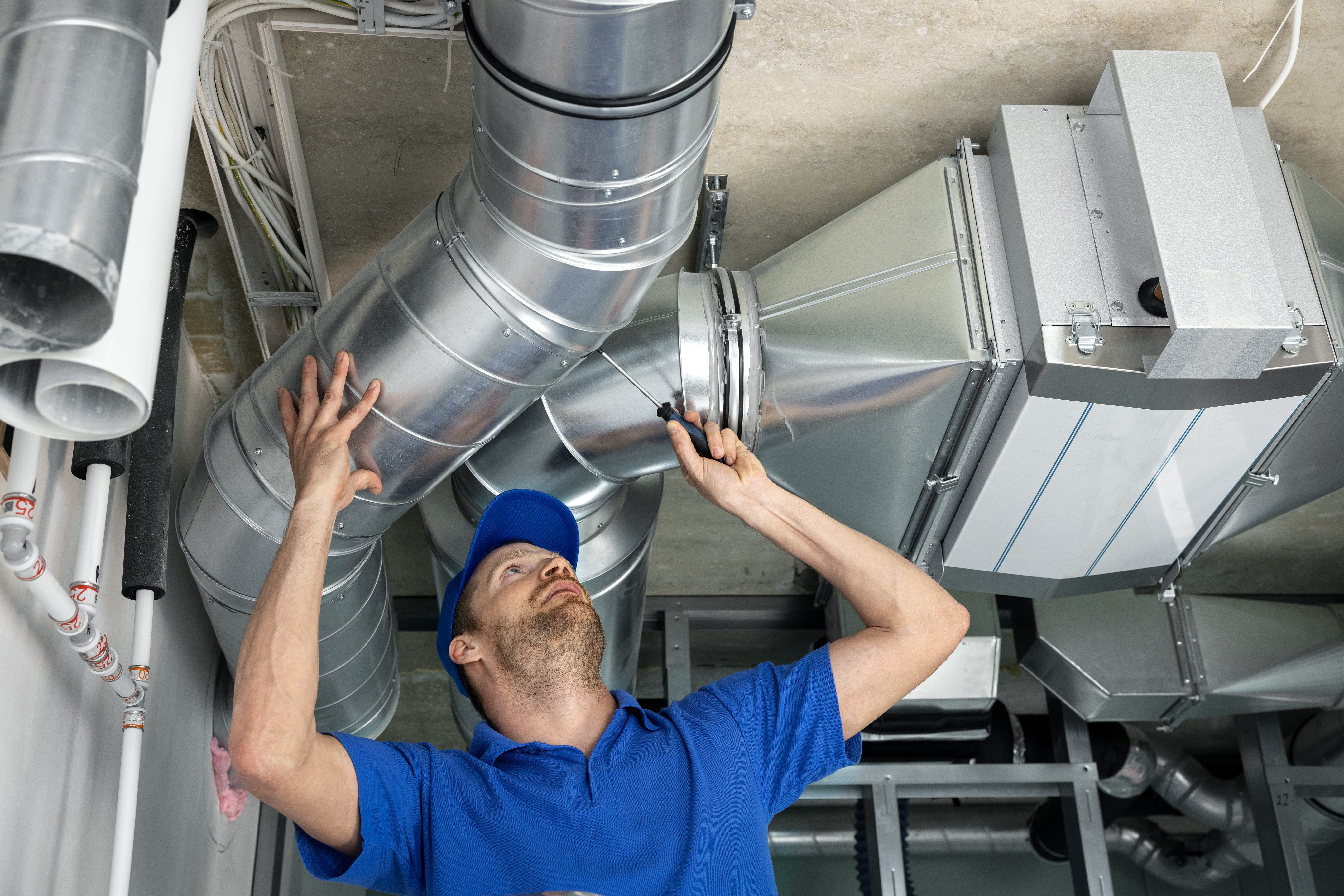
Transition to high-efficiency or heat-pump HVAC systems. Modern air-source and variable-refrigerant-flow (VRF) heat pumps provide efficient heating and cooling while supporting California’s long-term electrification goals. They often improve comfort and indoor air quality while lowering lifecycle costs.
Improve controls and zoning. Properly zoning large suites or multi-tenant floors prevents energy waste and hot-cold complaints. Integrate smart thermostats or advanced BAS for more granular control.
Seal and insulate the envelope. Roof insulation, window upgrades, and air-sealing of doors or penetrations can significantly reduce heating and cooling loads. Comfort improves, and equipment runs less often.
Upgrade plumbing and irrigation. Low-flow fixtures, aerators, and smart irrigation controllers save thousands of gallons of water annually, a key cost factor in drought-prone California commercial real estate markets.
Consider solar and battery storage. Solar photovoltaic systems and on-site energy storage reduce grid reliance, protect against rate spikes, and improve resilience during outages. Pairing solar with storage can also reduce expensive demand charges on utility bills.
Plan these projects with a holistic perspective and you’ll find they’re not more expensive or disruptive than you’d imagine. Align them with tenant renewal cycles, planned maintenance, and long-term investment horizons. We can help with the timing and the execution. Contact our team at Bell Properties Commercial Real Estate.
Leverage Financing and Incentives to Preserve Cash Flow
Reducing operating costs doesn’t mean depleting reserves. California offers multiple ways to finance upgrades with little or no upfront capital. Here are some ideas:
C-PACE (Commercial Property Assessed Clean Energy). C-PACE financing allows owners to fund 100% of eligible efficiency, renewable, or seismic upgrades with long repayment terms (often 20–30 years). Payments are made through the property tax bill, and the obligation stays with the property if it’s sold. This is ideal for deep retrofits that boost NOI and property value.
Utility rebates and programs. California’s major utilities regularly offer rebates for high-efficiency lighting, HVAC, refrigeration, water heating, and controls. Demand-response programs pay businesses to reduce load during peak demand, creating new recurring revenue streams.
State and local incentive programs. The Self-Generation Incentive Program (SGIP) and various municipal programs provide financial support for energy storage, renewable power, and electrification projects.
There are also federal tax credits such as the Investment Tax Credit (ITC) and bonus depreciation provisions, which can offset the cost of renewable energy systems and certain energy-efficiency improvements.
Consider vendor or performance financing. Many equipment suppliers and energy service companies (ESCOs) now offer “shared savings” models or lease-to-own structures that tie payments to verified savings.
Using these tools, you can modernize any commercial property, improve efficiency, and maintain liquidity at the same time.
Maintain Quality: Procurement, Tenant Experience, and Longevity

Cost control should never come at the expense of quality. Poor materials, neglected maintenance, or unhappy tenants cost more in the long run.
Prioritize value over price. Buy high-efficiency, durable equipment from reputable manufacturers. Longer warranties and proven reliability usually outweigh small upfront savings from low-end alternatives.
Require performance guarantees from vendors and service providers. For larger projects, use performance-based contracts that tie payment to measurable results. If projected energy savings aren’t achieved, the vendor or ESCO makes up the difference.
Track maintenance and warranties. A computerized maintenance management system (CMMS) keeps track of service intervals, warranty expirations, and parts inventories, preventing premature failures and expensive downtime.
Always communicate improvements. Let tenants know when efficiency upgrades improve comfort or sustainability. Visible improvements such as LED lighting, air quality enhancements, or EV charging reinforce a property’s value and justify market-rate rents.
Quality-focused cost management preserves a building’s reputation and ensures long-term asset appreciation.
Measure, Verify, and Keep Improving

Sustained cost reduction is an ongoing process. Here’s who we enact a plan of continuous improvement at Bell Properties Commercial Real Estate:
Set clear KPIs. Track metrics such as energy use intensity (EUI), water consumption per square foot, HVAC downtime, and tenant comfort scores.
Verify savings after upgrades. Compare post-project utility data to your baseline. If expected savings aren’t realized, re-inspect controls or equipment to identify the issue.
Re-benchmark annually. Buildings change as tenants come and go. Annual benchmarking ensures continued compliance with California’s reporting requirements and keeps your performance transparent.
Create a rolling reinvestment plan. Allocate a small portion of annual NOI, even 1–2%, toward continual energy, water, and technology upgrades. Over time, these incremental improvements yield major reductions in operating expenses.
Continuous monitoring and reinvestment transform efficiency from a one-off initiative into a sustainable business advantage.
Even small steps, when repeated systematically, create lasting value.
Cutting costs and maintaining quality aren’t opposites. They are actually two sides of intelligent building management. With careful planning, data-driven decisions, and the right financing tools, California commercial owners can achieve both.
Reducing operating costs in commercial buildings doesn’t mean cutting corners. It means running smarter. By pairing operational discipline with strategic upgrades and available incentives, owners can protect NOI today while future-proofing their assets for tomorrow’s market.
Start with data, focus on efficiency that enhances comfort, and reinvest savings back into the property. Over time, you’ll not only reduce costs, but you’ll also build a stronger, more valuable, and more resilient portfolio.
Let’s talk about the potential for saving on operational costs in your California commercial real estate assets. Contact us at Bell Properties Commercial Real Estate Management, and we’ll be happy to tell you where we see the brightest opportunities.