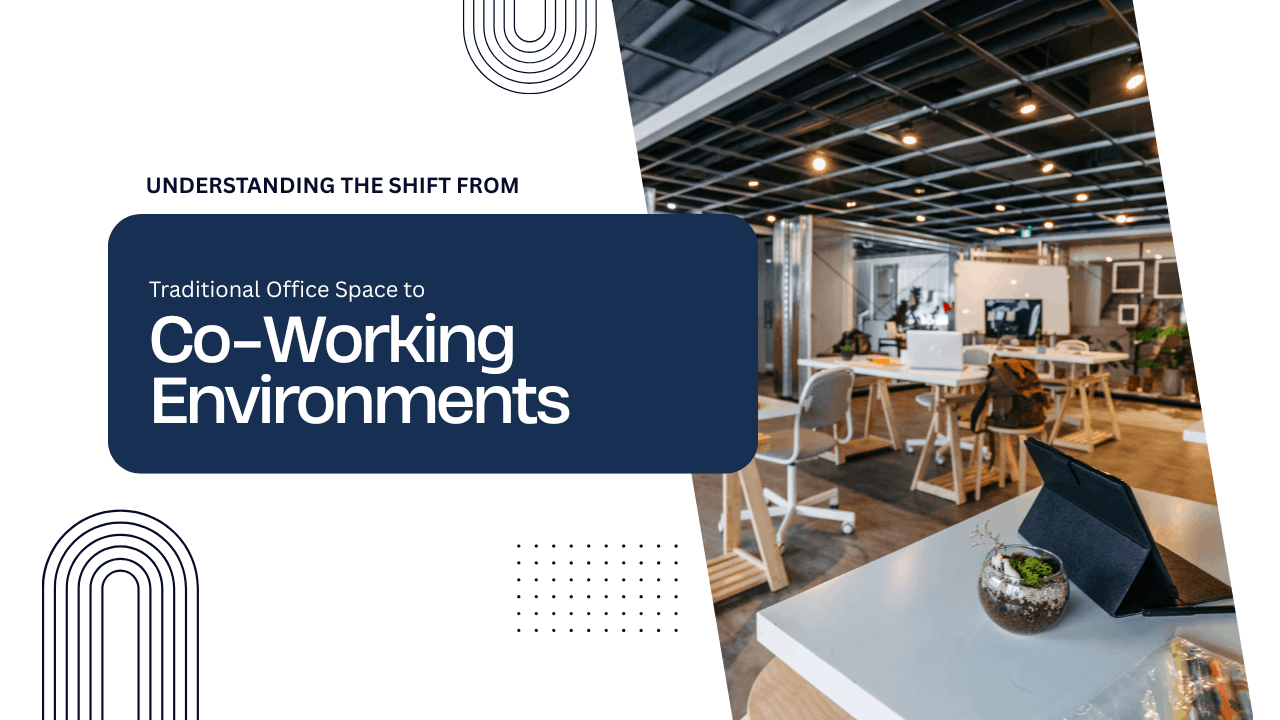
Is the traditional office model becoming obsolete?
A few years ago, not many investors would have imagined that some of the most desirable tenants in the office sector would be flexible workspace operators or co-working brands. Yet today, the lines between corporate offices, home offices, and shared workspaces have blurred beyond recognition.
The post-pandemic work environment, shaped by technology, shifting employee expectations, and the rise of hybrid schedules, has redefined what “office space” means. For commercial real estate investors, this isn’t just a passing trend. It’s a structural evolution of how tenants use and value space.
Understanding the shift from traditional offices to co-working environments is now essential to positioning a successful commercial real estate portfolio for the next decade of demand.
Bell Properties Commercial Real Estate Tips:
|
The Changing Nature of Work: Why Flexibility Became King
To understand co-working’s rise, we first need to examine what’s happened to the workplace itself.
For decades, office leasing was about permanence and predictability. Tenants signed five, ten, or even fifteen-year leases. Spaces were customized to a single corporate identity. Investors counted on long-term credit tenants, stable rent rolls, and low turnover.
Then, three powerful forces disrupted everything:
Remote work technology matured.
Cloud computing, video conferencing, and collaboration platforms made physical proximity less critical.The COVID-19 pandemic normalized flexibility.
Millions of workers proved they could be productive outside traditional offices, leading companies to reimagine their real estate footprints.The modern workforce changed expectations.
Employees now value work-life balance, wellness, and autonomy. Office design is expected to reflect culture and community, not hierarchy.
The result has been that the demand for static, long-term leased office space has softened, while interest in flexible, plug-and-play environments has surged. Companies want scalability, which is space that expands and contracts with business needs. Workers want optionality and a variety of professional environments without long commutes or rigid schedules.
That’s where co-working was able to take hold.
What Co-working Really Means and Why It’s Not Just for Startups
 When co-working spaces first appeared in the early 2000s, they were mostly seen as creative hubs for freelancers and startups. Open layouts, shared amenities, and networking events created community-driven alternatives to sterile cubicles.
But today’s model looks very different. It’s no longer a fringe concept. It’s gone completely mainstream.
Co-working now includes:
Flexible workspace providers like WeWork, Industrious, and Regus that lease and subdivide large blocks of office space.
Proprietary landlord-operated models where building owners manage their own co-working floors to attract diverse tenants.
Enterprise co-working, where major corporations lease co-working memberships for distributed teams or short-term projects.
Hybrid membership models, offering day passes, private offices, meeting rooms, and virtual addresses.
This diversity means co-working is no longer a niche segment. It’s a broad category of flexible office solutions responding to different user needs.
And for investors, co-working has shifted from a tenant type to an operating strategy. Instead of viewing co-working providers as short-term or risky occupants, many investors are embracing the model themselves, either directly or through partnerships.
Market Momentum: Data Behind the Trend
Industry research continues to confirm the momentum behind flexible workspace. While exact numbers vary by region, several consistent trends have emerged nationwide and are especially visible in California’s tech-heavy metros:
Hybrid work policies are permanent. Most companies have adopted hybrid schedules, reducing their overall footprint but increasing their need for flexible access points.
Occupancy in co-working centers remains resilient. Many shared workspace operators report occupancy rates higher than traditional offices in comparable markets.
Corporate adoption is driving growth. Large enterprises now represent a significant share of co-working memberships, seeking flexibility for satellite teams and project-based work.
Secondary and suburban markets are emerging. Remote and hybrid workers want professional spaces closer to home, driving demand outside major downtown cores.
Taken together, these shifts suggest co-working is a structural adjustment in how occupiers consume office real estate.
How California Real Estate Investors Can Leverage Co-working Demand

For investors, the co-working movement offers both opportunity and complexity. The challenge lies in adapting asset strategies to meet evolving user preferences while maintaining consistent returns. Here’s how forward-thinking owners and investors are capitalizing on the trend.
1. Partner with Established Operators
One of the most direct ways to enter the co-working market is through management partnerships with experienced brands. These operators bring expertise in marketing, operations, and community-building, while the investor retains ownership of the asset.
Under a management agreement, revenue and expenses are shared rather than a fixed lease arrangement, aligning incentives between owner and operator. For landlords, this means potential upside participation in the success of the space rather than a capped rental income.
2. Develop A Unique Flexible Space Concept
Some owners prefer to self-manage flexible floors within their buildings. A single 10,000–20,000 square foot floor can be converted into a co-working hub featuring private offices, shared desks, and conference rooms.
This hybrid model allows landlords to capture demand from smaller tenants or remote workers who would otherwise overlook the property due to rigid lease terms. It also acts as an incubator. As companies grow, they can “graduate” from co-working to traditional leased suites in the same building.
3. Reposition Underperforming Assets
In markets with declining traditional office occupancy, converting a portion of an underperforming asset into a co-working or flexible workspace can revitalize both the building and its cash flow.
Investors can reposition older offices by adding upgraded finishes, technology infrastructure, and shared amenities like cafés or lounges. These enhancements not only attract co-working users but can improve the marketability of the remaining space.
4. Target Suburban and Secondary Markets
As remote workers seek professional space closer to home, suburban co-working hubs are emerging in locations that previously lacked significant office demand. Shopping centers, mixed-use developments, and even repurposed retail spaces are being converted into co-working centers.
Investors who identify underserved micro-markets (think Pleasanton instead of San Francisco, or Irvine instead of Downtown Los Angeles) can capture early-mover advantages with lower entry costs.
At Bell Properties Commercial Real Estate, we’re providing leadership to multiple markets across California, and we can help owners position themselves in any location.
Key Metrics for Investors to Watch
Investing in or adapting to the co-working trend requires a slightly different financial lens than traditional office assets.
Important metrics include:
Occupancy Turnover Rate. Co-working spaces see higher tenant turnover, but shorter downtime between users.
Revenue per Desk or Square Foot. A critical indicator of profitability, factoring in flexible pricing and utilization rates.
Operating Costs. Co-working operations involve more frequent maintenance, cleaning, and technology infrastructure.
Retention and Membership Growth. Ongoing membership renewals reflect community engagement and long-term sustainability.
Capital Expenditure Efficiency. Fit-out costs for co-working spaces can be higher upfront but may yield better revenue density over time.
Professional management and accurate reporting become even more vital in this model. Consistent tracking and transparent financials allow investors to benchmark performance against traditional leases and optimize pricing strategies.
The Role of Technology in Co-working’s Success

Technology sits at the heart of the co-working revolution. From booking apps and access control to member networking platforms, digital integration is what enables flexibility at scale.
For investors, technology offers dual benefits. First, there’s the operational efficiency. Automation reduces administrative overhead, enabling smaller teams to manage large memberships. Decisions are also often driven by data. Usage analytics reveal which areas, amenities, or times generate the most value — informing layout design, pricing, and marketing.
Investors who incorporate proptech solutions into their co-working operations gain a competitive edge. Features like digital access keys, integrated billing, and real-time occupancy monitoring not only enhance the user experience but also streamline property performance tracking.
Any commercial real estate investors interested in the type of innovative technology we are investing in are welcome to contact us at Bell Properties Commercial Real Estate.
Risks and Considerations for Investors
While the upside potential is strong, co-working isn’t without risks.
Revenue Volatility. Shorter membership terms mean income can fluctuate more than fixed leases.
Management Intensity. Co-working spaces require hospitality-level service, not traditional property management.
Brand Reputation. Partnering with the wrong operator can affect a building’s positioning and tenant mix.
Economic Cycles. During downturns, freelancers and startups, a key demographic, may downsize memberships.
These risks can be mitigated through diversification (offering both flexible and traditional leases), careful operator selection, and conservative underwriting assumptions.
Smart investors view co-working not as a replacement for traditional leases, but as a complementary strategy that enhances occupancy resilience and appeal.
The office is evolving, and this shift from traditional office space to co-working environments represents one of the most significant transformations in commercial real estate in decades.
Whether you’re interested in adapting to this trend with your own commercial investments or you have questions about what we’ve discussed, contact us at Bell Properties Commercial Real Estate Management.